You are moving to Gurgaon, and three options are open: a co-living room, a PG, or a flat of your own. They are usually compared on rent alone, which is the one number that tells you least. Here is the comparison that matters — what you pay in month one, what you pay every month after, and what you spend your weekends doing.
The short version: for one person working in Gurgaon, co-living usually wins on total cost and almost always on effort. A PG is cheaper on paper and more basic in practice. A flat is the right answer for couples, families, or anyone who genuinely wants their own kitchen and front door.
Side by side
| Co-living | PG | Rented flat | |
|---|---|---|---|
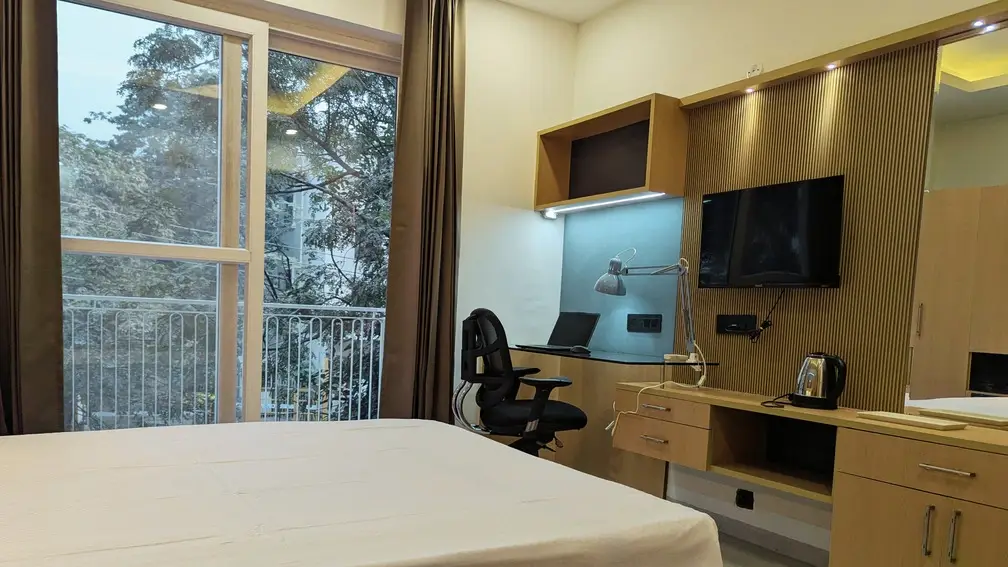
| Furnishing | Fully furnished | Basic | Usually bare |
| Brokerage | None | Sometimes | ~1 month + GST |
| Deposit | 1 month | 1–2 months | 2–3 months |
| Wi-Fi, water, common power | Included | Often extra | Separate bills |
| In-room electricity | Metered, billed to you | Often shared or extra | Yours |
| Food | Breakfast, dinner, weekend lunch | Basic mess | Cook or order |
| Housekeeping | Daily | Rare | Yours |
| Repairs and maintenance | Included | Owner, eventually | Yours to chase |
| Lease | No lock-in | Varies | Usually 11 months |
| People | Built-in community | Incidental | Whoever you bring |
The month-one number nobody quotes
Rent is the number you are shown. Move-in cost is the number you pay. For a flat at a notional ₹35,000/month, month one realistically looks like one month's brokerage plus GST, two to three months' deposit, and then the furnishing: bed, wardrobe, fridge, washing machine, AC if it isn't fitted, kitchen basics. That is comfortably ₹2.5–4 lakh before you have slept there a night, and a chunk of it is money you don't see again.
Co-living's month one is one month's rent as the Booking Amount, plus the first month's rent. No brokerage, nothing to buy.
This gap closes over a long enough stay — if you are in Gurgaon for five years and you keep the furniture, the flat's maths improves considerably. Over one or two years, it rarely catches up.
The cost that hides in your weekends
The honest difference between these three options isn't really money, it is attention.
In a flat, a leaking tap is your afternoon. Finding a plumber, being home for them, paying, and doing it again when it leaks in a different place. So is the internet engineer, the gas booking, the cook who stops coming, and the quarterly argument with a landlord about what counts as wear and tear.
In co-living, repairs and maintenance are included and someone else's job — that is the part residents tell us they underrate before moving in and rate highest after. In a PG, there is usually an owner who will get to it.
When a PG is the right answer
If the lowest possible monthly outgoing is the whole decision — you are studying, between jobs, or saving aggressively for something specific — a PG does the job. You get a bed, a roof and usually a mess.
What you trade is consistency. PGs are mostly owner-run single properties, so the standard of food, cleaning and repair depends entirely on the individual running it. Some are excellent. The variance is the risk, and you can't tell from one visit.
When renting a flat is the right answer
Rent a flat if any of these are true:
- You are moving with a partner or family
- You cook properly and want your own kitchen
- You have specific requirements — a pet, unusual hours, a home studio
- You are staying several years and will keep what you buy
- Privacy beats convenience for you, and you are willing to run the place
None of that is a weak argument. We would rather you took a flat and were happy than took a room and weren't.
When co-living is the right answer
Co-living fits if you are one person, new to the city or between set-ups, and you want your living situation to take up roughly none of your mental space. One payment, nothing to buy, nothing to maintain, and meals you didn't plan.
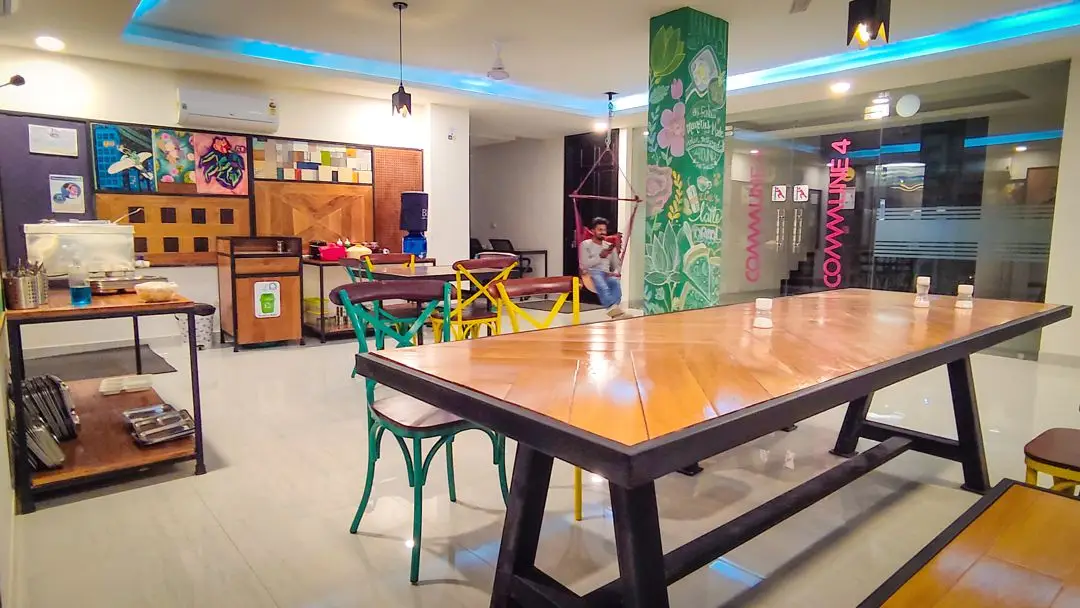
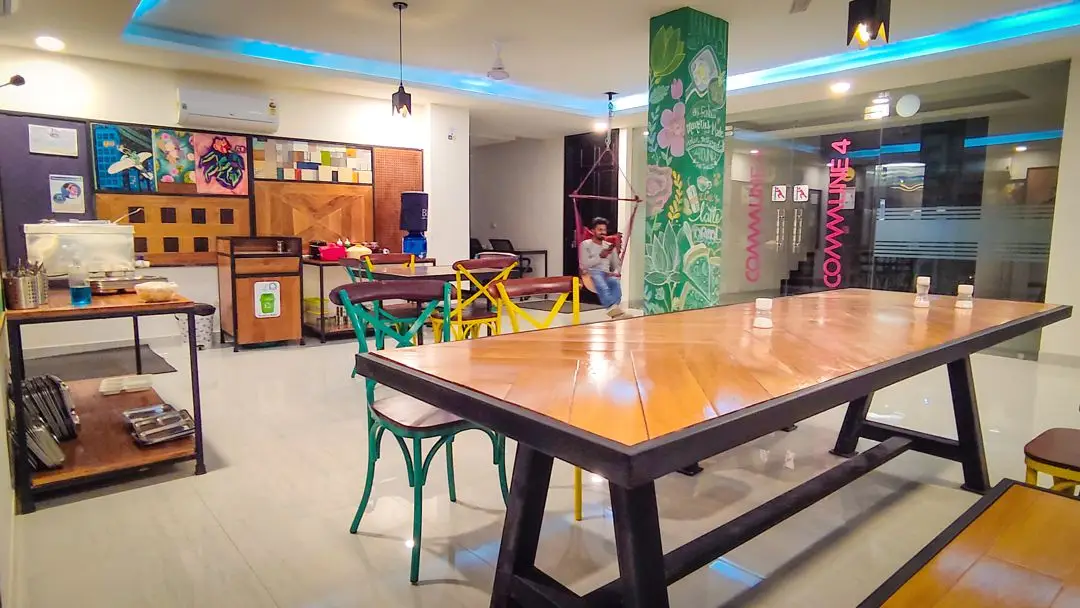
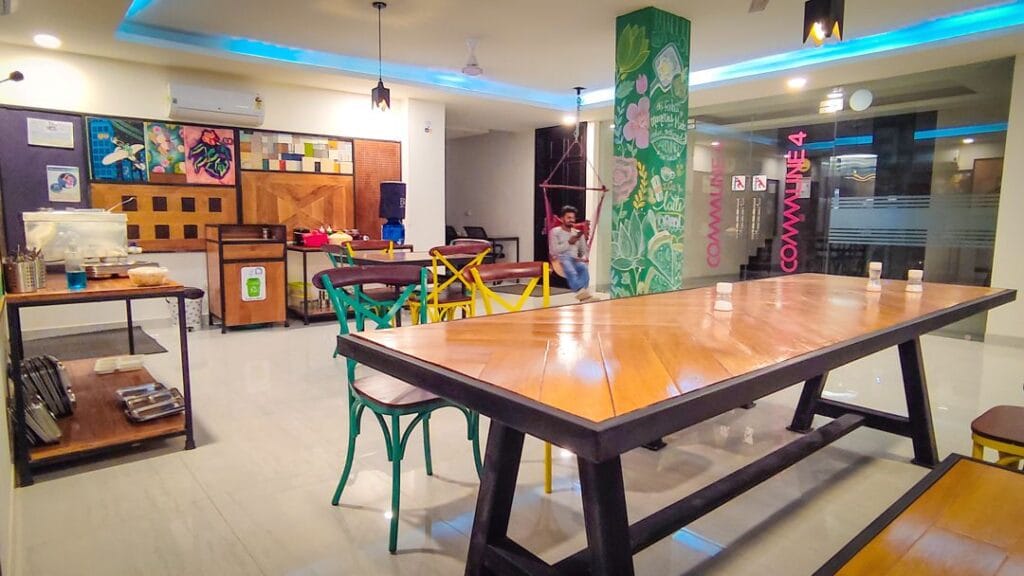
The part that's hardest to put in a table is the people. Moving to Gurgaon alone is a genuinely isolating experience, and most people underestimate it. A building with a lounge, shared dinners and a programme of things happening in it solves a problem that no amount of square footage does.
A few things worth knowing before you choose co-living:
- Your own room is yours, but the lounge, kitchen and terrace are shared
- In-room electricity is metered and billed on top; everything else is in the rent
- No lock-in on long stays — one full calendar month's notice to leave
- Your belongings stay your responsibility — every room has lockable wardrobes and drawers
Try it before you commit
If you genuinely can't tell from a visit, don't commit. A short-stay POD runs from ₹900/day at Commune Anant and Commune Prime — stay a week and find out whether shared living suits you before you sign anything.
See one in person
Pick a sector, come and look, eat a meal, talk to people who live there.
Frequently asked questions
Is co-living cheaper than renting a flat in Gurgaon? For one person, usually yes once everything is counted. A flat adds brokerage, a two to three month deposit, furniture and appliances, and separate bills for internet, water and food. Co-living bundles the room, meals, Wi-Fi, housekeeping and all repairs into one rent, with no brokerage and no lock-in.
Is co-living better than a PG? It is a different product. PGs are typically single properties run by their owner, so quality varies a lot between them. Co-living is professionally managed to one standard, with daily housekeeping, chef-cooked meals, shared spaces and maintenance handled for you.
Who should not choose co-living? Couples and families, anyone who needs their own kitchen, and people who would rather have complete privacy than have the place run for them. A rented flat serves them better.
Can I try co-living before committing? Yes — short-stay PODs start at ₹900/day, so you can stay for a few days or a week before deciding on a longer room.